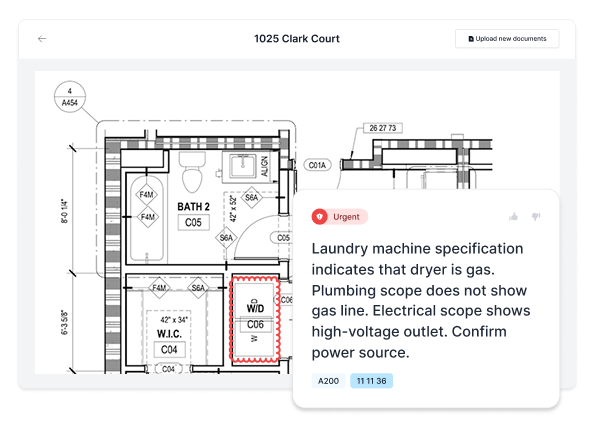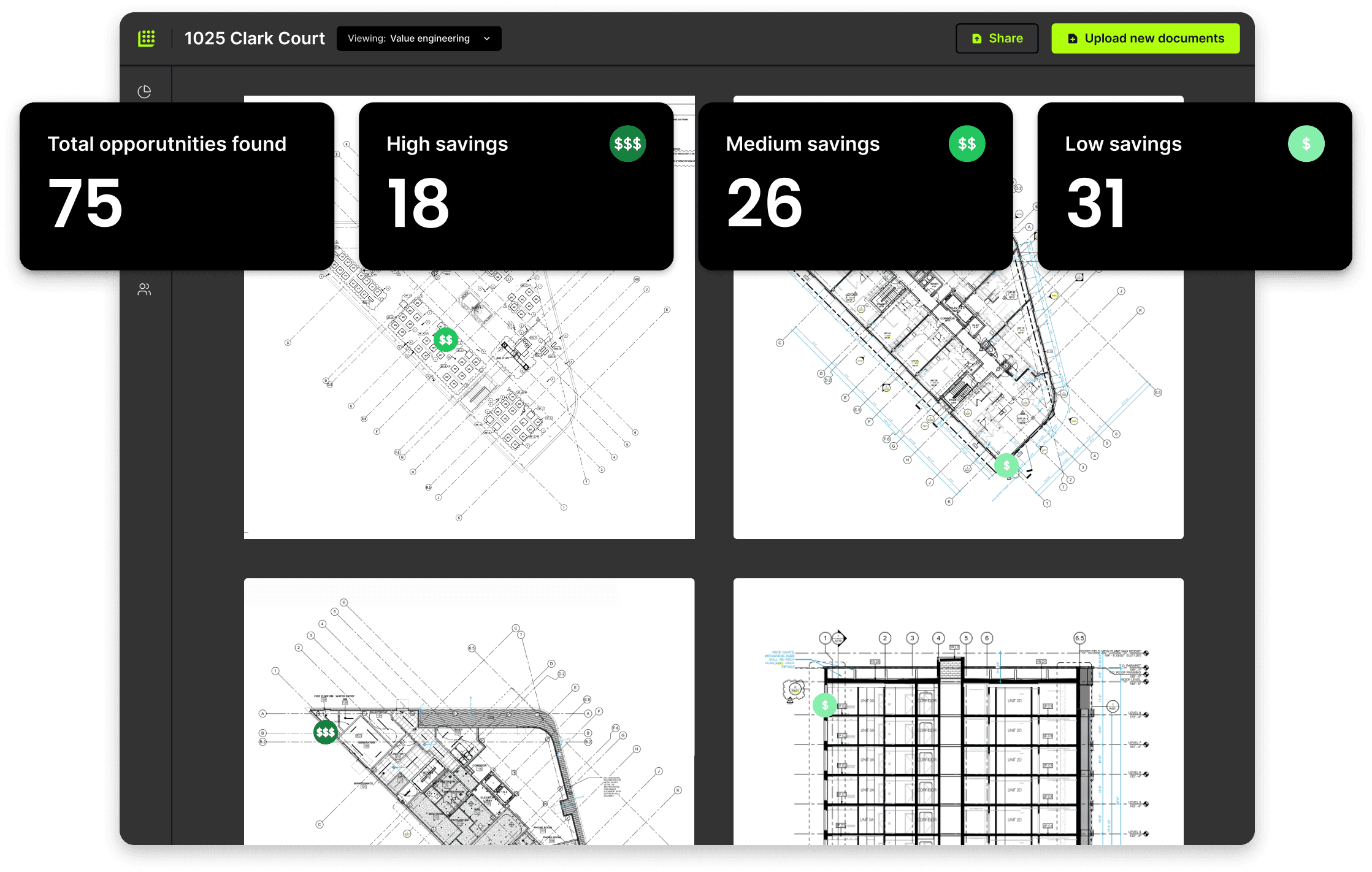
LightTable can now run a full Value Engineering review directly from your documents, fast enough to do it early and often. Surface 75 to 100 scored opportunities per run, each scored for rough-order cost, schedule, and every other scope it touches.
Why value engineering fails
It's too late. The high-value moves are only on the table early. At 100% CD, every change means redesign, redesign means design fees and weeks of schedule, and then the team has to reprice what it just changed. The log was priced against a set that's still changing, on a deadline. The savings erode the later you get in the project lifecycle.
No one has the full view. Every party is working from their own silo. The VE log is twenty or thirty line items, each a single line with no view of what it does to the rest of the building. Change a central plant to VRF and you've swapped an entire mechanical system with no idea what follows. The owner thinks they saved fifty thousand dollars. By the time the impacted scopes and the added soft costs land, they saved five. Sometimes it cost them ten.
Alignment is missing. The GC proposes, the design team defends, and the list stays short because everyone is protecting something.
How LightTable Value Engineering works
Today we're launching Value Engineering in LightTable. It reads the same drawings and specs as our QA/QC review and returns 75 to 100 scored opportunities within a couple hours, grouped by savings size and by building system. It's fast enough to run at DD, again around 50% CD, and at every milestone in between. VE becomes part of the normal iterations of cost modeling.
Every opportunity scored for full impact
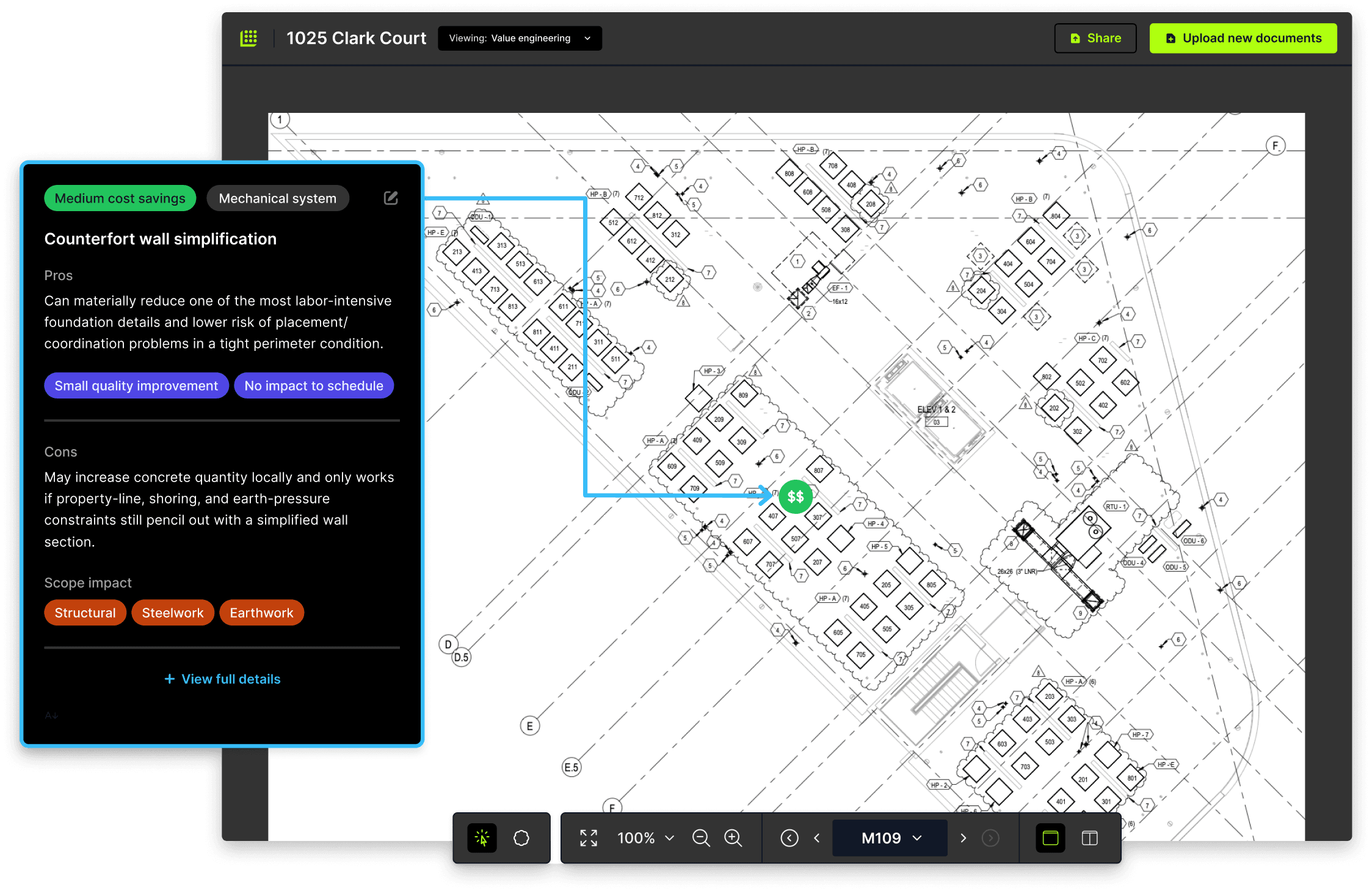
Each opportunity carries a rough-order-magnitude cost, a schedule read that separates lead time from labor, a soft-cost flag, an aesthetic-impact flag, and its own pros and cons. Savings show green. Costs show red.
A change that saves money but costs six weeks is a different decision than one that saves money and time. Now that's visible before the conversation starts.
The scopes a change affects
Every opportunity lists the other scopes it touches. Improve a curtain-wall layout and LightTable flags the decorative fins that attach to it, and the fabrication those fins require all in context of your drawings and specifications.
Cuts that hold Every saving opportunity arrives with its real impact attached, so what the team approves survives the reprice instead of coming back higher.
Phase-aware by design Run VE at DD and it points at the three- and four-hundred-thousand-dollar moves, because those are the ones still available to you. Run it at 100% CD and it finds the fifty- and hundred-thousand-dollar refinements you can stack together without triggering a redesign.
Every opportunity carries an aesthetic-impact flag, so the design team can filter out what's off the table and engage with what isn't. The whole list is visible early, which means design, GC, and owner have the conversation before the cuts start costing schedule.
"The comments we get from LightTable's Value Engineering are impressive. It's getting to the point where I'd expect these comments from someone with 25 years of experience. Some of what it was pulling up, that's a 30-year veteran's catch." - Grant Yamaki, Design Director at Coburn
This is value engineering that earns its name. You have the leverage to make the big moves and the time to absorb them without a redesign fire drill.